
The nano-lasagna: Novel 2D materials gain momentum
Dübendorf, 12.03.2026 — There is more than just graphene: In an interdisciplinary project, Empa researchers have focused on a new class of two-dimensional materials known as MXenes. This versatile group of materials is suitable for a wide range of applications, from energy storage to medicine. The project team has made significant progress in modeling and synthesizing MXenes.
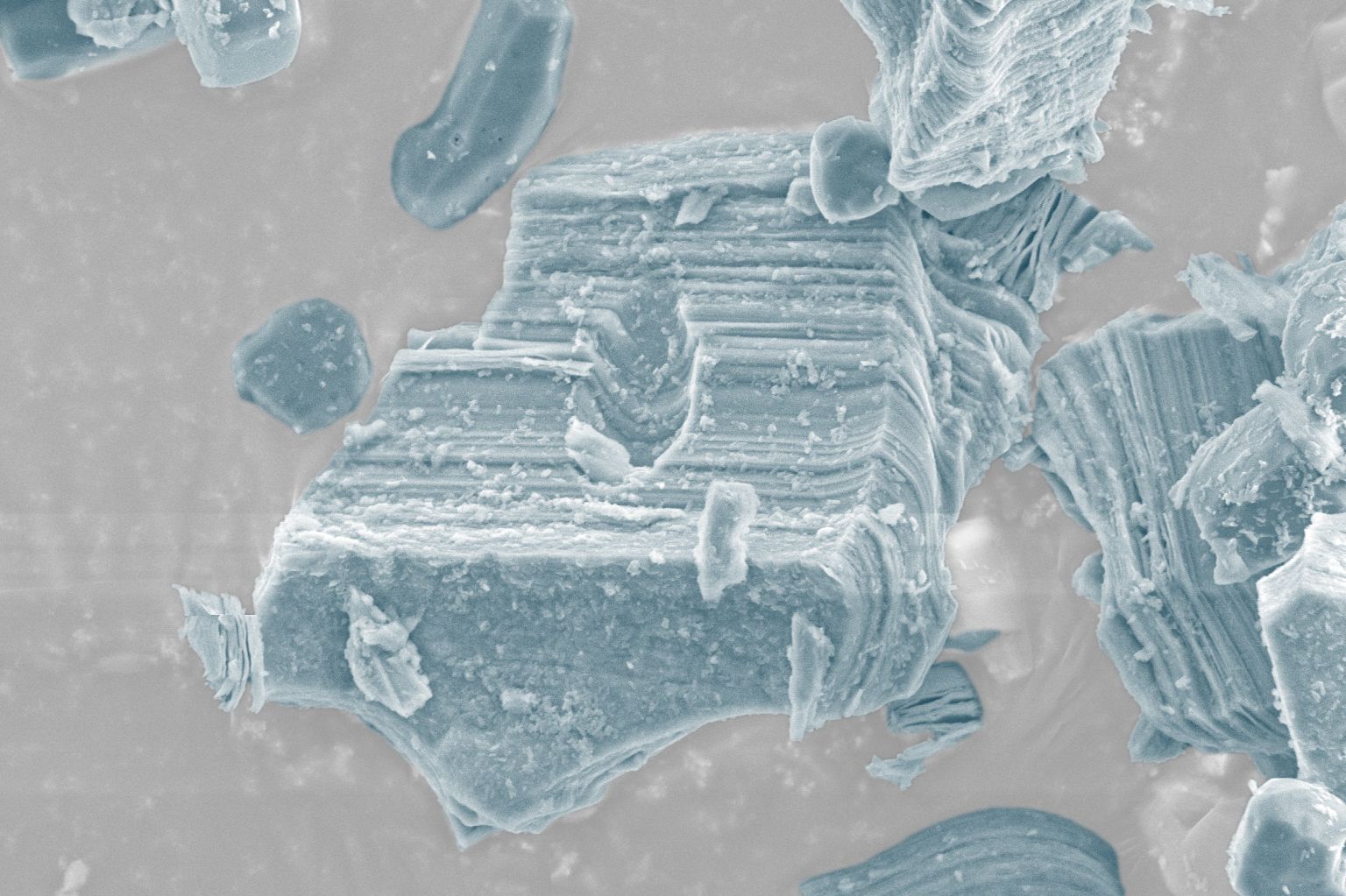
Two-dimensional materials consisting of a single layer of atoms are currently the subject of intense research. Their 2D nature gives them many advantageous properties, whether in terms of electrical conductivity or mechanical robustness, and it can lead to special quantum effects. The best-known two-dimensional material is graphene, a form of carbon. But it is not the only one. The rising stars in the 2D sky are called MXenes (pronounced “maxenes”).
Unlike graphene, which consists only of carbon atoms, MXenes can contain one or more transition metals in combination with nitrogen or carbon. They are produced from so-called MAX phases: ceramic crystals with a layered structure – “a little like a lasagna,” compares Empa researcher Jakob Heier. The intermediate layers are etched out by adding acid. The remaining layers, which are no longer chemically bonded to each other, are separated from each other in an ultrasonic bath, and the MXenes are ready to go.
This novel class of materials is particularly interesting for research because: “The MAX phases can consist of many different elements and combinations thereof, allowing us to produce tailor-made MXenes for numerous applications,” explains Heier. However, as of yet, these potential all-rounders, which were only discovered around 15 years ago, are neither widely used nor well understood. A research initiative at Empa led by Jakob Heier aims to change that.

Interdisciplinary perspective
The corresponding research initiative, TailorX, is a so-called research booster in which several research groups within Empa work together to thoroughly examine an emerging topic over a period of two years and establish it as a research activity. Scientists from four different Empa laboratories are working on MXenes: Functional Polymers, to which Jakob Heier is associated, High-Performance Ceramics, Building Energy Materials and Components, and nanotech@surfaces.
The comprehensive approach is worthwhile because, as Heier explains, “We cover the entire spectrum, from basic research and modeling to the production of MAX phases and MXenes, right through to their applications. It is one of Empa's great strengths that all these areas of expertise are brought together in a single institute.”
The project was launched in 2024 and is now drawing to a close. The co-initiators are satisfied with the results. “We now have a large portfolio of different MAX phases that we can synthesize with a high degree of purity,” says Michael Stuer from the High-Performance Ceramics laboratory. Synthesizing the precursor crystals is not entirely straightforward – it is not enough to simply mix the desired elements in the right proportions. “By gaining a better understanding of the synthesis process, we were able to synthesize numerous MAX phases with various degrees of chemical complexity that are not yet available on the market,” explains Stuer.
Capturing CO₂ and treating cancer
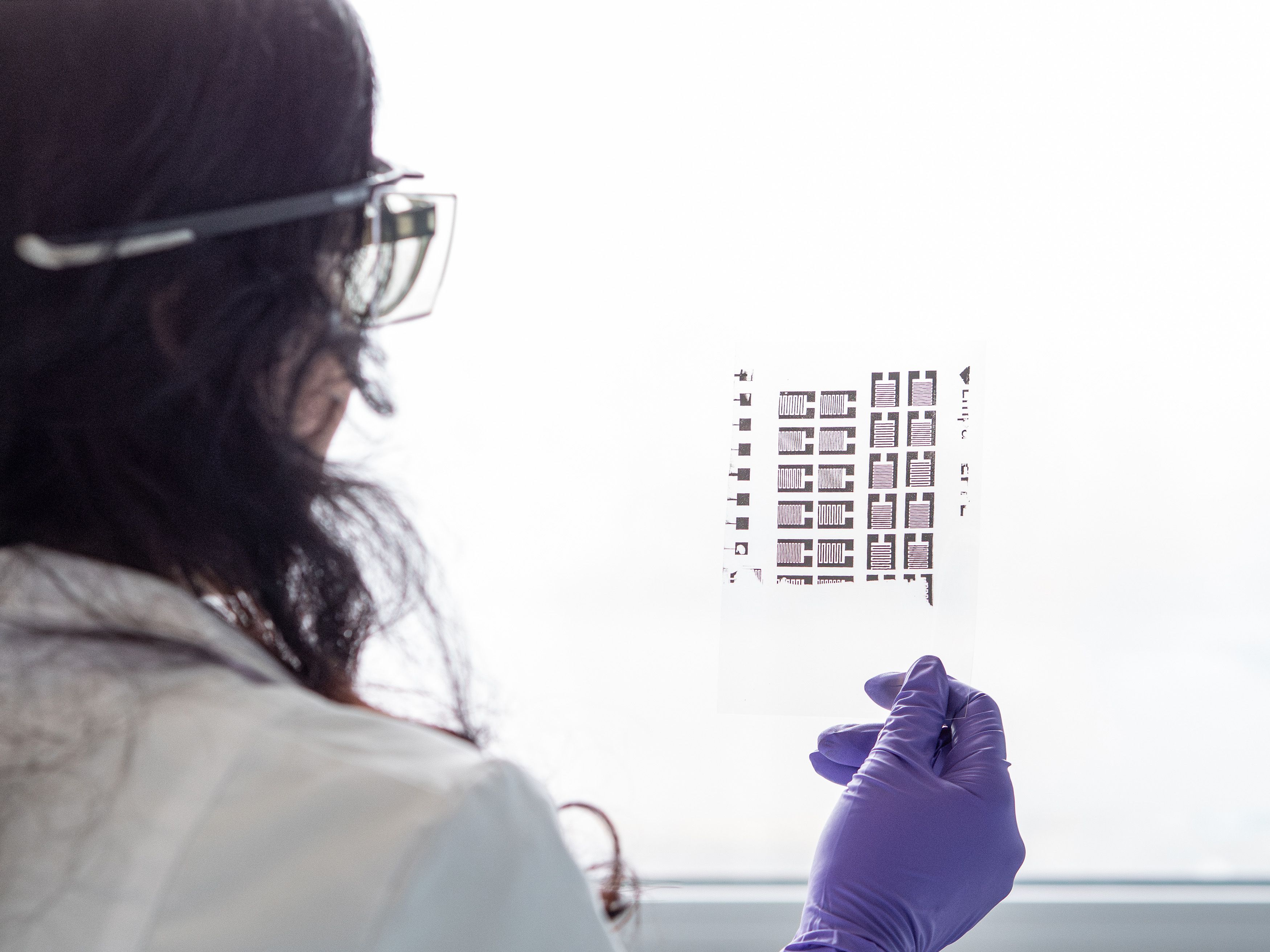
The synthesis experts received support from the nanotech@surfaces laboratory, whose researchers have developed various AI models for MAX phases and MXenes. These models enable the synthesis of the phases and their individual geometry to be predicted and understood. However, modeling is also central to the application of MXenes. “We are currently developing a model that describes the interaction of MXenes with CO₂,” says nanotech@surfaces researcher Cesare Roncaglia.
The absorption and conversion of carbon dioxide is a key focus among the potential applications for MXenes. Thanks to their large surface area, these 2D materials have the potential to capture CO₂ from the air – and also help convert it into usable raw materials, in line with Empa's large-scale research initiative Mining the Atmosphere. However, this does not exhaust the MXenes' potential. The versatile 2D nanoparticles could also be used in broader catalysis, energy storage, or sensor technology. In medicine, certain MXenes promise antimicrobial effects or targeted cancer therapy. With this in mind, the project participants are working with researchers at Empa in St. Gallen to investigate their effects on living cells and the environment.
Environmentally friendly and scalable
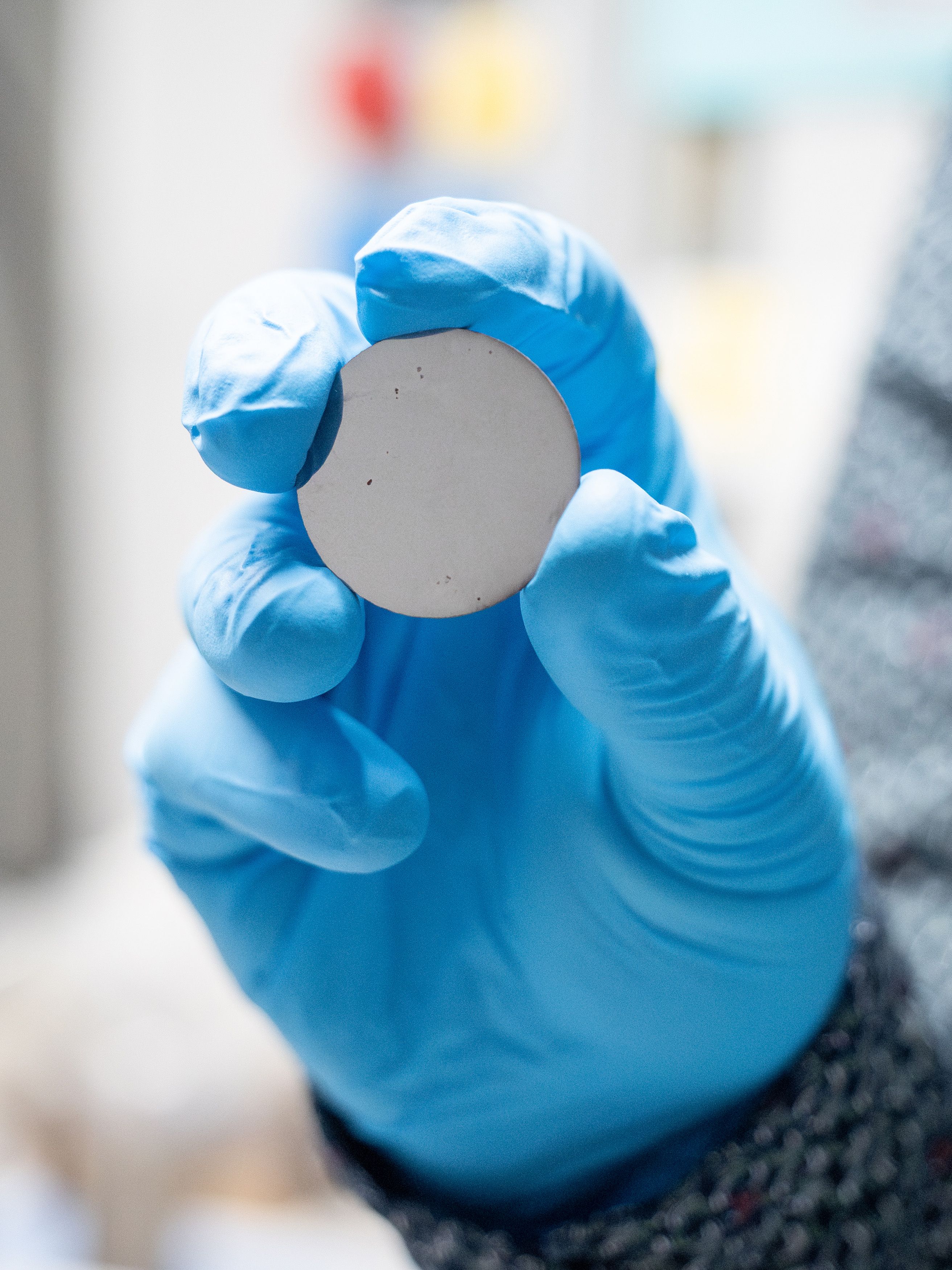
Environmental compatibility is also a key consideration in the production of MXenes. Strongly corrosive acids are typically used to etch them from the MAX phases. This is not only dangerous for humans and harmful to the environment, but also costly. “The etching process is one of the reasons why only a few MXenes are commercially available,” says Shanyu Zhao from the Building Energy Materials and Components laboratory. In the TailorX project, he and his team not only worked on the applications and characterization of MXenes, but also developed an alternative “green method” for exfoliating them from the MAX phase. “Our approach avoids the use of the aggressive and hazardous hydrofluoric acid, and the entire process is more effective and gentle, making it both sustainable and scalable,” says Zhao.
For the researchers, the conclusion of the Research Booster program is merely the beginning of their work with these versatile 2D materials. They have already launched further projects aimed at incorporating MXenes into a wide range of applications, such as high-performance supercapacitors, innovative batteries, electromagnetically insulating aerogels, and medical sensors. At the same time, basic research into this young class of materials is ongoing. “With their flexibility and adaptability, MXenes offer such great advantages that applications will not be long in coming,” summarizes Jakob Heier.
Further information
Dr. Jakob Heier
Functional Polymers
Phone +41 58 765 43 56
jakob.heier@empa.ch
Dr. Michael Stuer
High Performance Ceramics
Phone +41 58 765 41 83
michael.stuer@empa.ch
Dr. Shanyu Zhao
Building Energy Materials and Components
Phone +41 58 765 42 44
shanyu.zhao@empa.ch
Dr. Cesare Roncaglia
nanotech@surfaces
Phone +41 58 765 44 52
cesare.roncaglia@empa.ch